Minimal Brain Icon SVG for Mental Health: Symbolism Meets Practical Design
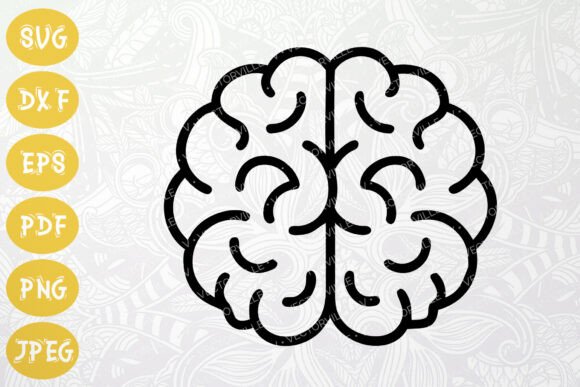
There is something quietly powerful about a simple line drawing of a brain. It stops you. It makes you think. It doesn't need to shout to be understood. That is exactly the kind of energy a Minimal Brain Icon SVG for Mental Health brings into a project. Whether you are designing a logo for a psychology practice, putting together materials for a mental health awareness campaign, or crafting stickers for a self-care planner, this icon works because it strips away noise and leaves only meaning.
I have spent a fair amount of time working with vector graphics, and one thing I have learned is that less really is more when you want people to connect with an idea. A minimalist brain icon does not compete with your message. It supports it. It signals clarity, focus, and intention. And when you are dealing with something as delicate and important as mental health, that kind of visual restraint matters.
Why a Minimal Brain Icon Works for Mental Health Projects
Mental health is a deeply personal subject. People approach it from all kinds of places: some are professionals looking for tools to help others, some are individuals working on their own well-being, and some are advocates trying to spread awareness. A minimal brain icon meets everyone where they are. It is neutral enough to be inclusive but specific enough to convey the right message.
Think about the last time you saw a cluttered design. Did it make you feel calm or anxious? For mental health related visuals, simplicity is not just an aesthetic choice. It is a functional one. A clean, single-layer brain icon reduces cognitive load. It lets the viewer focus on the message rather than decoding the graphic. That is a small but meaningful detail when you are designing something meant to comfort, inform, or inspire.
Mental Health Awareness Campaigns
If you have ever organized or contributed to a mental health awareness campaign, you know that visuals matter a lot. Flyers, social media graphics, website banners, email headers, and even merchandise all need a consistent visual anchor. A minimal brain icon gives you that anchor without feeling clinical or cold. It can be used as a standalone symbol or combined with text, colors, and other elements. Because it is a single-layer SVG, it scales beautifully from a tiny social media avatar to a large poster.
I have seen campaigns use this kind of icon on everything from Instagram posts to printed brochures at community health fairs. The consistency across formats makes a big difference in building recognition and trust.
Psychology and Coaching Branding
Therapists, counselors, life coaches, and wellness practitioners often struggle to find logos that feel professional yet approachable. A brain icon that is too detailed can look intimidating or overly scientific. A minimal version strikes a balance. It suggests intelligence, thoughtfulness, and care without feeling sterile.
One therapist I know used a minimal brain icon as the centerpiece of her website and business cards. She mentioned that clients often comment on how calming the logo feels. That is not an accident. The clean lines and open space communicate a sense of safety and clarity, which is exactly what you want in a therapeutic setting.
Self-Care and Journaling Graphics
Self-care is a personal journey, and many people enjoy creating their own planners, journals, or digital mood boards. A minimal brain icon fits naturally into these contexts. It can be used as a stamp, a sticker, a header element, or a decorative accent. Because the file format includes SVG, DXF, EPS, and PNG, you have the flexibility to use it in digital apps, print it at home, or cut it with a machine like Cricut or Silhouette.
I have seen people use this icon to mark sections in a gratitude journal, create habit trackers, or design their own mental health bingo cards for group activities. It is versatile enough to be playful or serious depending on how you style it.
Educational Infographics and Posters
Teachers, professors, and mental health educators often need visuals that explain concepts without distracting from the content. A minimal brain icon works well in infographics about brain function, emotional regulation, stress response, or mindfulness. It can be repeated, sized up or down, and combined with text without overwhelming the layout.
If you are creating a handout for a workshop or a poster for a school counseling office, this icon helps communicate the topic instantly. It is especially useful for materials aimed at young adults or teenagers, who often respond better to clean, modern visuals than to overly detailed illustrations.
Different Users, Different Benefits
The beauty of this minimal brain icon is that it adapts to the user, not the other way around. Here is how different people might get value from it:
- Graphic designers appreciate the single-layer SVG format because it is easy to recolor, resize, and integrate into larger compositions without dealing with messy layers.
- Crafters and hobbyists love that the DXF and SVG files work with cutting machines. You can make vinyl decals for laptops, water bottles, or notebooks. You can create iron-on transfers for T-shirts or tote bags. The possibilities go far beyond digital use.
- Small business owners in the wellness space can use the icon for branding materials, packaging, and social media content without needing to hire a designer.
- Nonprofit organizations focused on mental health advocacy can use the icon for fundraising materials, event signage, and awareness merchandise. The clean design keeps production costs low because it prints cleanly at any size.
- Educators can incorporate the icon into lesson plans, handouts, and classroom decor without worrying about copyright or complex formatting.
Practical Considerations Before Using the Icon
Before you download and start using the minimal brain icon, there are a few things worth thinking about based on my own experience working with similar assets.
File format matters depending on your workflow. If you are using a cutting machine like Cricut, the SVG and DXF files are your best friends. Make sure your software supports single-layer files if you plan to cut rather than print. The single-layer format in this set is actually a strength for cutting because there is no risk of misaligned layers.
Scalability is excellent, but test it first. While vector files scale infinitely, how the icon looks at very small sizes depends on the thickness of the lines. In this case, the minimal design holds up well even at small dimensions, which is not always true for more detailed brain illustrations. I have tested it down to about half an inch on a sticker, and it remained legible and attractive.
Color choices affect the mood. The icon itself is clean and neutral, but the colors you pair it with can shift its tone completely. Soft pastels work well for self-care and therapy contexts. Bold colors can make it feel more energetic or modern. Because the SVG is simple, experimenting with color is fast and easy.
Consider your audience's sensitivity. Some people have strong associations with brain imagery, especially in clinical or medical contexts. A minimal icon tends to feel less clinical and more human, which is an advantage in mental health work. But if your audience is very young children or people with specific trauma around medical symbols, you may want to pair the icon with warm, reassuring design elements.
Strengths and Honest Limitations
No single asset is perfect for every situation, and it helps to know where this icon excels and where it might not be the best fit.
Strengths: The icon is incredibly versatile. It works across digital, print, and physical craft mediums. The file set is comprehensive, so you are unlikely to need additional formats. The minimalist style is timeless and unlikely to look dated in a few years. It also respects the viewer's attention by not overcomplicating the visual.
Limitations: If you need a highly detailed or anatomically accurate brain illustration for a medical textbook or neuroscience presentation, this icon is probably too simplified. It is a symbol, not a diagram. Also, if your brand or project relies on detailed, ornate, or highly expressive visuals, the minimalist style might feel out of place. It works best in contexts where clarity and calmness are the goals.
Getting the Most Out of the Icon
One of the things I appreciate most about this set is that it includes a high-resolution PNG with a transparent background. That is surprisingly handy for quick mockups or for people who do not use vector software regularly. You can drop it into a Canva design, a Google Doc, or even a PowerPoint slide without any extra steps.
The JPEG and PDF files at 300 dpi are ready for print, which saves time if you are sending files to a printer or making physical copies. For crafters, the DXF file means you can use it with Silhouette Studio Basic Edition without needing an upgrade. That is a small but practical detail that makes the set accessible to more people.
If you are someone who likes to collect design resources for future projects, this icon is worth keeping in your library. Mental health is not a passing trend, and having a clean, symbolic brain icon on hand can save you time when a project comes up unexpectedly. Whether you are designing for a client, a community group, or your own creative practice, having a reliable visual shorthand for mental health is a valuable tool.
I have found that the best design assets are the ones that disappear into the background when they need to and step forward when they need to. This minimal brain icon does exactly that. It is there when you need a clear, recognizable symbol, and it stays out of the way when the message needs to be the focus. That is a rare balance to strike, and it is exactly what makes it such a useful addition to any designer's or crafter's toolkit.