The Power Behind Modern Life: Benefits of Lithium Batteries
Walk into any room and look around. The device in your pocket, the cordless tools in your garage, the backup power system keeping your home office running—all of them share a common heartbeat. That heartbeat is the lithium battery. In recent years, the benefits of lithium batteries have quietly reshaped how we work, travel, communicate, and even think about energy. Unlike the heavy, short-lived batteries of the past, lithium-based power packs deliver a combination of lightness, stamina, and reliability that has become nearly invisible in its ubiquity. Yet understanding what makes them tick—and why they matter for both daily life and serious business—can help you make smarter choices, whether you are buying a new laptop, outfitting a fleet of delivery drones, or designing a product that needs to run for hours without a second thought.
This article explores the real-world value of lithium batteries across personal and professional contexts. We will look at where they shine, who benefits most, what trade-offs exist, and how to evaluate whether a lithium-powered solution fits your specific needs. No unnecessary jargon, just practical insight drawn from everyday experience and industry best practices.
What Makes Lithium Batteries Different from the Rest?
To appreciate the benefits of lithium batteries, it helps to know what sets them apart chemically. At its core, a lithium battery uses lithium ions moving between an anode and a cathode to store and release energy. That basic mechanism yields several characteristics that older technologies like nickel-cadmium or lead-acid simply cannot match.
- Energy density – Lithium batteries pack more power into less space and less weight. A lithium pack that runs a laptop for eight hours weighs a fraction of what a comparable lead-acid pack would weigh.
- Flat discharge curve – Devices powered by lithium maintain consistent voltage output until near depletion. That means your power tool does not slow down as the battery drains, and your smartphone does not dim halfway through the day.
- Low self-discharge – A lithium battery loses only about 1.5 to 2 percent of its charge per month when sitting idle. That is why a battery you charged three months ago still works when you pull it out of a drawer.
- No memory effect – You can recharge a lithium battery at any state of charge without degrading its total capacity. Partial charges are perfectly fine, making real-world usage far more convenient.
For both individuals and organizations, these traits translate into fewer interruptions, longer equipment life, and less waste. That is not just a technical advantage—it is a practical one that affects budgets, schedules, and daily convenience.
Benefits of Lithium Batteries in Everyday Life
Think about the last time you packed for a weekend trip. Your phone, a pair of wireless earbuds, perhaps a portable power bank, maybe a rechargeable flashlight or a compact camera. Every one of those items relies on lithium chemistry to stay small and light enough to carry without thinking. The benefits of lithium batteries in personal life are often invisible precisely because they work so well—you expect your devices to last through the day, to recharge quickly, and to not weigh you down.
Consider the parent who needs a reliable cordless vacuum to clean up after kids. Or the photographer shooting in the field who needs multiple camera battery packs that do not add pounds to the bag. Or the remote worker who depends on a laptop battery that can handle back-to-back video calls without hunting for an outlet. In all these cases, lithium enables portability without performance sacrifice.
But there is another layer: safety and peace of mind. Modern lithium batteries incorporate sophisticated battery management systems that protect against overcharging, overheating, and short circuits. That means the power bank you carry on a plane, the electric scooter your teenager rides, and the smartwatch on your wrist all have built-in safeguards that make them reliable companions rather than potential hazards. For the general consumer, that safety record—while not perfect—has improved dramatically over the past decade.
Battery for Life and in Business: Why Commercial Users Are Switching
In the business world, the calculus around power is different. Downed equipment means lost revenue. Heavy batteries mean higher shipping costs and worker fatigue. Short run times mean frequent replacement and disposal expenses. That is where the benefits of lithium batteries become a strategic advantage rather than a mere convenience.
Take a small logistics company running a fleet of electric pallet jacks. Switching from lead-acid to lithium cuts charging time from eight hours to under two, allows opportunity charging during breaks, and eliminates the need for dedicated battery rooms with ventilation. The result is a measurable increase in throughput and a drop in operational costs. Similarly, a medical device manufacturer that chooses lithium for portable diagnostic tools gets longer field operation, lighter equipment for clinicians, and a battery that can be recharged hundreds of times before needing replacement. These are not theoretical advantages—they are financial and operational realities that show up on the bottom line.
Business owners also value the predictability of lithium. Because the discharge curve is flat, equipment performs consistently throughout a shift. Because the cycle life is high—often 500 to 1000 full charge cycles before significant degradation—the total cost of ownership can be lower than cheaper alternatives that wear out quickly. For industries like warehousing, healthcare, construction, and field services, lithium is no longer a niche choice; it is becoming the standard.
Real-World Scenarios That Show the Difference
Let us look at three concrete examples to illustrate the benefits of lithium batteries in action.
Scenario 1: The mobile DJ. A DJ needs to power speakers, lights, and a mixer for outdoor events where no mains power is available. With a lithium deep-cycle battery as the portable power station, the entire setup runs for six hours on a single charge, weighs under 20 pounds, and can be recharged in the car on the way to the next gig. The same capacity in lead-acid would weigh three times as much and require hours of downtime for recharging.
Scenario 2: The solar homeowner. Someone with rooftop solar panels installs a lithium home battery to store excess energy for nighttime use. The battery occupies a fraction of the space that a lead-acid bank would need, charges faster during peak sun hours, and lasts for a decade of daily cycling without significant capacity loss. The homeowner gets energy independence and a tangible reduction in utility bills.
Scenario 3: The drone-based inspection company. Drones inspecting wind turbines or bridges need batteries that provide maximum flight time with minimal weight. Lithium polymer packs deliver the high discharge rates and energy density required. The company can complete more inspections per day, swap packs quickly in the field, and rely on consistent voltage throughout each flight for stable camera footage.
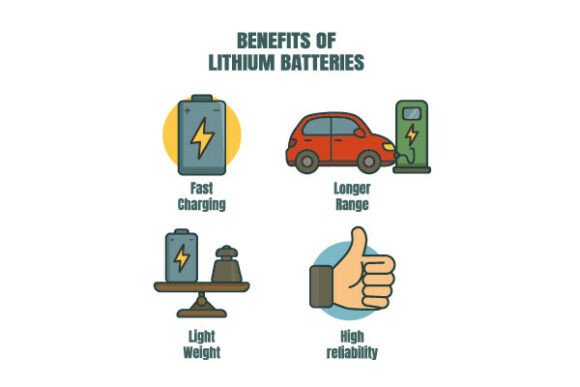
These examples highlight how lithium adapts to diverse needs while delivering a common set of benefits: more power per pound, faster charging, longer lifespan, and reliable performance.
Strengths and Limitations: A Balanced View
No technology is perfect, and the benefits of lithium batteries come with trade-offs that users should understand. On the strength side, lithium excels in weight-sensitive applications, in scenarios requiring fast charging, and in environments where space is tight. The cycle life is generally excellent, especially for newer chemistries like lithium iron phosphate (LiFePO4), which can exceed 2000 cycles. Additionally, lithium batteries require minimal maintenance—no watering, no equalization charges, no terminal cleaning.
On the limitation side, upfront cost remains higher than lead-acid. A lithium battery may cost two to three times more initially, though the longer lifespan often offsets that over time. Cold weather can reduce performance unless the battery has a built-in heater or is designed for low-temperature operation. And while safety has improved vastly, improper handling—such as using a damaged pack or a mismatched charger—can still lead to thermal events. For most consumers and businesses, these limitations are manageable with reasonable precautions, but they deserve honest acknowledgment.
Who Benefits Most from Lithium?
While nearly any battery user can gain something from lithium, certain groups see disproportionate value. General consumers who value lightweight portability, professionals who rely on tools and devices for their livelihood, business owners managing fleets of powered equipment, creators and makers who build portable electronics or art installations, and outdoor enthusiasts who need reliable power far from the grid all find that the benefits of lithium batteries align directly with their priorities.
For those with an adventurous spirit—the kind of person who values strength, toughness, and resilience—the lithium battery is a natural fit. It endures harsh conditions, delivers power on demand, and refuses to quit when the going gets tough. Whether you are climbing a mountain with a GPS device, running a pop-up market stall with portable lights, or building a prototype in a maker space, lithium gives you the freedom to work and explore without being tethered to a wall outlet.
Visual Identity and the Battery Concept
The idea of a battery that powers both life and business has also found expression in visual branding. A strong, bold image—such as a vector graphic of a rugged battery design—resonates with creators and business owners who want to communicate reliability, durability, and forward thinking. The concept of Battery for Life and in Business can be represented through clean, scalable graphics appropriate for logos, stickers, posters, t-shirts, infographics, and other print needs. Because vector files like EPS 10 allow color changes and infinite scaling without loss of quality, such images serve diverse purposes across marketing, product packaging, and brand identity. Whether you are a startup founder building a brand around portable energy, an artist incorporating power motifs, or a business owner creating training materials, a well-designed vector graphic captures the essence of what lithium enables: strength, endurance, and adaptability.
This digital product typically comes in a zip folder containing one EPS 10 file and one JPEG file at 2000 by 2000 pixels at 300 dpi—a format suitable for both professional print and digital display. The creative freedom to edit colors and resize means the same image can appear on a tradeshow banner, a product label, or a social media post. For anyone building a brand around energy, resilience, or modern power solutions, such a visual asset bridges the gap between abstract technology and tangible customer trust.
How to Evaluate Whether Lithium Is Right for Your Needs
If you are considering a lithium battery for a personal device or a business application, ask these questions:
- How important is weight and size? If the battery needs to be carried, moved, or stored in a tight space, lithium is likely the best choice.
- How often will you cycle it? For daily use over several years, lithium's longer cycle life provides better value per charge than cheaper alternatives.
- Do you need fast charging? If equipment downtime matters, lithium charges two to four times faster than lead-acid.
- Is cold-temperature operation required? Check specifications—some lithium chemistries handle cold better than others, and built-in heaters can expand the operating range.
- What is the total cost of ownership? Include purchase price, lifespan, replacement frequency, maintenance labor, and disposal costs. Often, lithium wins on total cost even with a higher sticker price.
Answering these questions honestly will guide you toward the right solution without overspending or under-delivering on performance.
Final Thoughts on Lithium as a Life and Business Partner
The benefits of lithium batteries extend far beyond technical specs. They represent a shift in how we interact with power—moving from scarcity and constraint to abundance and flexibility. In life, lithium means you can work from anywhere, play without worrying about outlets, and trust that your devices will keep up with you. In business, lithium means higher productivity, lower operational friction, and a clearer path to sustainability through reduced waste and energy efficiency.
As battery technology continues to evolve, lithium remains the proven workhorse for the present and a stepping stone toward even smarter storage solutions. Whether you are a consumer looking for everyday convenience, a professional demanding reliability, or a business owner optimizing operations, understanding the practical strengths of lithium helps you make confident decisions. The power to choose well is, in itself, a kind of freedom—and lithium gives you exactly that.