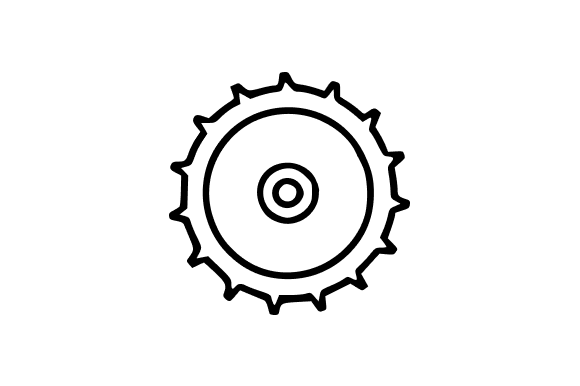
Sketch of a Circular Saw Blade Line Art: A Versatile Design Asset for Modern Creatives
When you browse through stock illustration libraries, you will notice a wide range of styles. Some are highly detailed and photorealistic, while others are minimal and abstract. Among these, line art holds a unique position. It is clean, intentional, and direct. A sketch of a circular saw blade line art sits squarely in this category — it reduces a complex tool to its essential outlines. This type of illustration is not just a drawing; it is a design tool in its own right. Whether you work in marketing, product design, or content creation, understanding what this asset offers can help you decide if it fits your project.
What Makes a Circular Saw Blade Line Art Distinct
Line art, by definition, relies on clear strokes and negative space. There are no gradients, shadows, or textures to distract the eye. In the case of a circular saw blade, the illustration typically emphasizes the teeth, the central arbor hole, and the overall disc shape. The result is a graphic that communicates the idea of a saw blade without the visual clutter of a photograph. This distinction matters because it allows the viewer to focus on form and function. A sketch of a circular saw blade line art becomes a symbol rather than a literal depiction. It can represent cutting, construction, precision, or industry — depending on how you use it.
Another key distinction is scalability. Because the artwork is built from defined lines, it reproduces well at any size. A large poster and a small icon can both use the same line art file without losing clarity. This is not always the case with highly detailed or shaded illustrations, which can become muddy when resized. The clean lines of a line art sketch provide a consistent visual experience across different output formats.
Comparing Line Art to Other Illustration Styles
To decide whether a sketch of a circular saw blade line art is right for you, it helps to compare it with other common approaches. Photographs, for example, offer realism but may introduce unwanted background elements or lighting issues. A photo of a saw blade on a workbench includes not just the blade but also the surface, shadows, and possibly other tools. This can be useful for contextual shots, but it may not work well in a minimalist design where you want the blade to stand alone.
Vector illustrations with full shading and color are another option. These can look polished and modern, especially for branding materials. However, they often require more time to produce or customize. They also carry a specific stylistic weight — a colorful, shaded illustration sets a certain tone that may not suit every project. A line art version, by contrast, is more neutral. It adapts more easily to different color schemes and design languages. You can invert it, overlay it, or combine it with other elements without clashing.
There is also the category of abstract or geometric representations. Some designers use simplified shapes that barely resemble a saw blade. While these can be creative, they may not communicate the intended object clearly. A sketch of a circular saw blade line art strikes a balance. It remains recognizable while still being stylized enough to function as a graphic element rather than a literal illustration.
Strengths of Using Line Art for a Circular Saw Blade
One of the strongest advantages is versatility in format. When you receive files in SVG, EPS, JPG, and transparent PNG, you can use the same artwork across nearly any medium. SVG and EPS are vector formats, meaning you can edit them in professional design software, change stroke weights, or adjust colors without losing quality. The transparent PNG is particularly useful for quick mockups, social media graphics, or presentations where you need the image to sit on a colored or textured background. The high-resolution JPG works for scenarios where vector editing is not needed, such as printing on paper or fabric.
Another strength is the visual clarity for instructional or informational contexts. If you are creating a presentation about power tools or an infographic about saw blade types, a line art sketch communicates the basic anatomy without overwhelming the viewer. You can easily label parts — teeth, arbor, kerf — because the lines guide the eye. This makes the illustration an effective teaching tool.
From a creative standpoint, line art also lends itself well to repetition and pattern. A single circular saw blade line art can be arranged in rows, rotated, or scaled to create a repeating motif for backgrounds or packaging. The simplicity of the style means the pattern remains legible even when repeated densely.
Tradeoffs and Limitations to Consider
No asset is perfect for every situation. A sketch of a circular saw blade line art has limitations. Because it lacks shading and texture, it cannot convey material properties. You cannot tell from the line art whether the blade is steel, carbide-tipped, or diamond-coated. If your project requires communicating the material quality or surface finish, a photograph or a more detailed illustration would be a better choice.
Another tradeoff is emotional tone. Line art can feel more technical or schematic. If your design needs warmth, personality, or a handcrafted feel, a more textured or organic illustration style might serve you better. Some line art sketches are intentionally rough or hand-drawn, but many are clean and mechanical. The circular saw blade line art you choose will likely fall somewhere on that spectrum. It is worth examining the style of the specific asset before assuming it will match your project's tone.
File format compatibility is rarely an issue with standard formats like SVG and EPS, but if you work exclusively in web-based tools that do not support vector files, you may need to rely on the PNG or JPG version. These raster formats are less flexible for resizing or editing, so plan accordingly.
When This Asset Is the Right Choice
Consider using a sketch of a circular saw blade line art when your design calls for a clean, iconic representation. It works well in logos or branding for hardware stores, woodworking classes, tool manufacturers, or construction-related services. It is also a strong choice for informational graphics where the goal is to explain parts or processes. If you are designing a poster or flyer for a workshop, a line art saw blade can serve as a central visual without competing with text.
Another ideal use case is in digital content where file size and loading speed matter. Vector files are lightweight, and even the PNG version will be smaller than a detailed photograph. This makes the asset suitable for websites, mobile apps, and email newsletters where performance is a consideration.
For stickers and promotional merchandise, line art is often preferred because it prints cleanly. Small details remain visible, and there are no color gradients that might misalign during manufacturing. A transparent PNG overlay also allows you to place the blade on merchandise mockups quickly.
When You Might Need Another Option
If your project requires a realistic depiction — for example, a product catalog where customers need to see the exact tooth geometry — a line art sketch will not suffice. In that case, a high-resolution photograph or a detailed 3D render would be more appropriate. Similarly, if you are creating a mood board or a visually rich presentation that relies on texture and atmosphere, line art may feel too sparse. You might combine it with other elements, but on its own, it may not deliver the depth you need.
Another situation is when you need the illustration to carry a specific brand color or gradient. While you can recolor vector line art, the style inherently uses solid strokes. If your brand relies on gradients, drop shadows, or multi-color effects, you would need to modify the asset significantly. In some cases, starting with a different illustration style altogether might save time.
Practical Factors in Choosing the Right File Format
The availability of multiple formats is a practical advantage. SVG files are excellent for web use because they are code-based and scale infinitely. EPS files are standard in professional print workflows, especially if you use Adobe Illustrator or CorelDRAW. The JPG version is useful for quick previews or for uploading to platforms that do not accept vector files. The transparent PNG is arguably the most versatile for non-designers, as it can be used in presentation software, word processors, or basic image editors without requiring vector software.
If you plan to customize the asset — changing stroke color, adjusting thickness, or combining it with other graphics — the SVG or EPS file is essential. Without those, you will be limited to the original design. If you simply need a ready-to-use graphic, the PNG or JPG will serve you just fine.
Making an Informed Decision
Choosing a design asset involves balancing project requirements with practical constraints. A sketch of a circular saw blade line art is not a one-size-fits-all solution, but it covers a broad range of use cases effectively. Its strengths lie in clarity, versatility, and ease of use. Its limitations center around a lack of realism and emotional texture. Understanding these tradeoffs allows you to decide when this asset fits and when you should look elsewhere.
For designers, marketers, and content creators working on projects related to tools, construction, woodworking, or industrial themes, this line art is a reliable resource. It works in digital and print media, it is easy to edit and scale, and it communicates the concept of a circular saw blade without unnecessary detail. If those qualities match your project's needs, the asset is a practical addition to your toolkit.
If you value realism, material cues, or a more expressive style, you may need to supplement or replace the line art with another type of illustration. There is no single right answer. The best choice depends on the specific context of your design, your audience, and the message you want to convey. By understanding what this asset does well — and where it falls short — you can make a confident decision that supports your creative goals.