Simple Car Outline: A Practical Asset for Streamlined Creative Work
Vector graphics occupy a unique space in modern design and content creation. They are not merely decorative elements but functional building blocks that shape the visual identity of a project, from branding assets to instructional materials and promotional layouts. Among these, a clean, versatile outline of a common subject like a car offers surprising utility across many disciplines. The Simple Car Outline provides exactly that: a stripped-down, scalable representation that fits into workflows ranging from professional graphic design to everyday content production. This article explores how this asset functions within broader creative and business processes, where it fits before, during, and after a project, and how to integrate it smoothly into your own work.
What Simple Car Outline Brings to Your Workflow
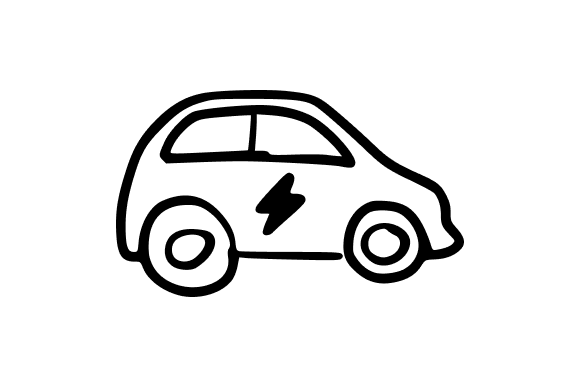
At its core, the Simple Car Outline is a vector illustration that depicts a car in its most essential form. The emphasis is on clean lines and clarity, not photorealism or excessive detail. This makes it an ideal asset for projects where a recognizable silhouette is needed without visual noise. The offering includes four file formats: SVG, EPS, JPG, and transparent PNG. Each serves a distinct purpose within a production pipeline.
SVG and EPS are scalable vector formats. They maintain crisp edges at any size, which is critical for print materials such as posters, brochures, or signage. They also allow for easy recoloring, resizing, and modification within vector editing software. The JPG provides a high-resolution raster version suitable for quick placements in documents or web mockups. The PNG offers a transparent background, allowing the outline to be overlaid on any design without manual masking. For a designer, marketer, or content creator, having these formats ready reduces friction between ideation and execution.
Where Simple Car Outline Fits in the Creative Process
Understanding where an asset fits into a process helps you use it more intentionally. The Simple Car Outline serves different roles depending on the stage of your project.
Before a Project: Planning and Mood Boards
During the planning phase, the outline can be used in wireframes, mood boards, and style tiles. For example, a web designer working on a car dealership site may drop the SVG into a layout mockup to test spacing, scale, and visual hierarchy before investing time in custom photography or detailed illustrations. Entrepreneurs creating pitch decks for a transportation-related startup can use the outline as a placeholder icon to communicate the concept quickly. The low visual complexity helps stakeholders focus on structure and flow rather than getting distracted by intricate visuals.
During a Project: Production and Iteration
When the project moves into active production, the Simple Car Outline becomes a direct working asset. In print design, the EPS file can be imported into Adobe Illustrator or InDesign, resized to fit a flyer or brochure, and recolored to match the brand palette. For web design, the SVG can be embedded directly into HTML or CSS, allowing for responsive scaling and even animation via CSS or JavaScript. The transparent PNG is especially useful for quick comps in Google Slides, Canva, or Keynote presentations, where you need to layer elements without spending time on editing. The outline also works well in infographics, where it can symbolize transportation, logistics, travel, or automotive topics with minimal visual weight.
After a Project: Repurposing and Archiving
A well-built vector asset does not disappear after one use. The Simple Car Outline can be archived in a shared asset library or cloud storage folder. Months later, it can be pulled for a new campaign, an updated infographic, or a different client project. Because it is a simple outline, it adapts to changing brand guidelines and visual styles without looking dated. This long-term reusability is one of the strongest arguments for investing in clean, versatile assets rather than one-off custom illustrations.
Integrating Simple Car Outline with Other Tools and Assets
No asset exists in isolation. The real value of the Simple Car Outline emerges when you combine it with other resources in your toolkit.
Vector software integration. When working in Adobe Illustrator, Affinity Designer, or similar programs, the EPS or SVG file imports cleanly. You can apply stroke weights, change fill colors, combine it with other vector shapes, or use it as a mask. The simplicity of the outline makes it an excellent candidate for creating pattern fills, custom icons, or repeating motifs.
Presentation and content platforms. For users of Canva, PowerPoint, or Google Slides, the transparent PNG is the most direct option. Drop it onto a slide, resize it, and layer text or other graphics around it. The outline style works well with modern minimalist slides and does not compete with textual content.
Web and app development. Developers can use the SVG directly in HTML or inline within CSS. The outline can serve as an icon, a loading placeholder, or a visual element in a user interface. Because it is a simple shape, it loads quickly and renders consistently across devices. You can also combine it with SVG filters or animations to create subtle motion effects without heavy scripting.
Marketing and promotional materials. For email campaigns, the JPG version is a safe choice for compatibility across email clients. For social media graphics, the PNG allows you to place the outline on branded backgrounds, photos, or gradients. The outline style conveys a clean, professional aesthetic that aligns well with modern branding.
Practical Implementation Tips for Different Use Cases
To get the most out of the Simple Car Outline, consider how it will be used in specific contexts. The following observations are drawn from real workflow experience.
Print Design
When using the EPS file for print, open it in your vector software and check the stroke settings. If the outline is a stroked path, you can adjust the weight to match the intended output size. For large-format prints like banners, a heavier stroke maintains visibility. For smaller items like business cards or stickers, a lighter stroke keeps the design delicate. Always convert text to outlines if any exists, and confirm that the file uses CMYK color space if the print vendor requires it.
Web and Digital Use
For responsive web design, the SVG format is your best bet. You can set the width to a percentage and let the height scale proportionally. If you need to adjust colors for dark mode or theming, use CSS variables to change the fill or stroke colors dynamically. For older browsers that do not support SVG fully, the PNG provides a fallback. In content management systems like WordPress or Squarespace, upload the PNG for simplicity, but consider using an SVG plugin if you need scaling flexibility.
Infographics and Instructional Materials
In infographics, the Simple Car Outline can be repeated in different sizes and colors to show progression, comparison, or flow. For example, you might array several outlines in a row to represent a timeline of transportation evolution, or use a single outline as a callout icon next to a data point. The transparent PNG is especially convenient when working in data visualization tools like Tableau or Adobe Express, where layering is common.
Stickers and Merchandise
For physical products like stickers, decals, or apparel, the SVG or EPS file is essential. It can be sent to a cutting machine or screen printer. A simple outline works well for single-color prints, which are often cheaper to produce than multicolor designs. Be mindful of the minimum line thickness: if the outline strokes are very thin, they may not transfer well to fabric or vinyl. Consider thickening the strokes slightly for physical production.
Organizing Your Vector Library for Long-Term Efficiency
One of the less discussed aspects of asset management is organization. Over time, a collection of files grows, and finding the right asset can waste time. A few practices help keep your Simple Car Outline and similar assets accessible.
- Name files consistently. Use descriptive names that include the subject, style, and format. For example, "simple-car-outline-svg.svg" is clearer than "car.svg".
- Tag or label assets. If you use a digital asset management tool or cloud storage, apply tags such as "transportation", "icon", "vector", "outline", and "simple". This makes searching faster.
- Store original files separately. Keep the original SVG and EPS files in a master folder. When you create variants (e.g., recolored versions), save those in a subfolder with a naming convention that indicates the color.
- Thumbnail previews. Generate thumbnail previews for folders so you can visually scan your library. Many file managers and asset tools do this automatically.
These organizational steps pay off when you revisit the asset months or years later, particularly if you work in a team where multiple people may need access to the same file.
Quality Control and Consistency Across Projects
Using the same outline across multiple projects can help establish visual consistency. If you produce materials for a single brand, the Simple Car Outline can become a recurring visual motif that reinforces brand recognition. This is especially useful for businesses in the automotive, logistics, or transportation sectors, where a car silhouette appears frequently.
To maintain consistency, set a few rules early. Decide whether the outline will always be used in a specific color, orientation, or scale. If you plan to use it across both print and digital, test how it renders in each medium. A black outline on a white background works universally, but if you invert colors for dark mode or dark backgrounds, confirm that the stroke remains visible and does not bleed into similar tones.
Quality control also means checking file integrity. Before using the Simple Car Outline in a final deliverable, open the SVG or EPS file to ensure the paths are clean and there are no stray nodes or duplicate shapes. If you use the PNG, verify that the transparency is intact and that no white halo appears around the edges. These small checks prevent last-minute surprises during client reviews or print runs.
Adapting the Asset for Different Outputs
Flexibility is one of the main advantages of a simple outline. You can treat it as a starting point rather than a final image. For instance:
- Duplicate the outline and offset it slightly to create a drop-shadow effect.
- Use it as a clipping mask for a gradient or texture fill.
- Combine it with text to form a logo mark or badge.
- Apply a dash array to the stroke for a stitched or sketched look.
- Scale it down to use as a bullet point icon in a list.
Each of these adaptations retains the recognizable silhouette while giving you a custom look without starting from scratch. The Simple Car Outline is not a final destination; it is a raw material that gains value through iteration and context.
Final Observations on Integration
The most effective use of any asset comes when you understand its role within a larger system. The Simple Car Outline is a low-friction element: it imports quickly, scales without loss, and works across multiple formats and platforms. It reduces the time between concept and execution, especially for professionals who need reliable assets under tight deadlines. Whether you are building a presentation, designing a flyer, developing a website, or creating educational content, this outline provides a consistent visual shorthand that viewers recognize instantly.
The inclusion of SVG, EPS, JPG, and PNG formats means you are covered for nearly any output scenario. For those who prioritize efficiency, having these files ready eliminates the need to recreate or source a car silhouette each time. Over repeated use, the outline becomes a familiar part of your visual vocabulary, saving time and ensuring visual coherence across your body of work.